
Supreme Zeus Strategy

- RTP
- 96.39
- Max Win
- 12,500x
- Volatility
- Med-high
Bankroll Calculator
No working tricks or cheats - what strategy actually does
Short answer up front: there is no Supreme Zeus cheat, no trick sequence, no "hot reel" you can read. The game runs on a certified RNG, so every spin starts cold and carries no memory of the last one. A 12,500x top win existing in the math does not make it reachable on demand.
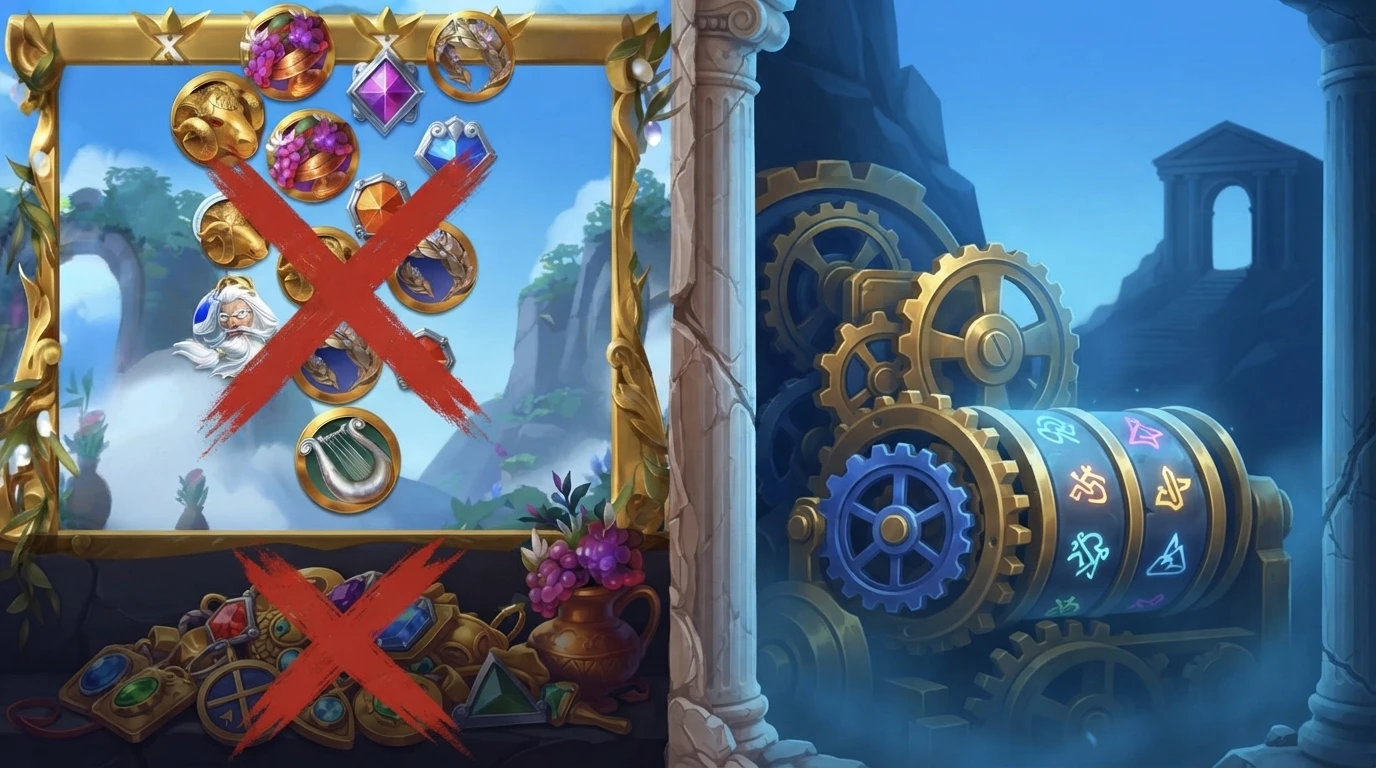
I've seen the usual searches - Supreme Zeus tricks, cheats, a system that prints money. None of them survive contact with how a regulated slot works. The 1,024-ways engine and the cascade feature behave the same whether you bet $0.10 or $75; nothing you do between spins shifts the odds.
So what is strategy here? It's risk management, not exploitation. You can't change the hit rate or the payout ceiling, but you fully control stake size, session length, and when you walk away. That's the honest lever. Everything below is about spending your bankroll on terms you set in advance. If you want the fairness and RNG proof behind this, see the is-it-legit breakdown.
The honest takeaway
Supreme Zeus can't be cheated. The only real strategy is controlling stake, session and stop points - plan around small, frequent results, not the 12,500x headline.
What medium-high volatility means for your stake
Volatility is listed as medium-high. Hit frequency is 37.11%, so roughly one in every three spins lands something. That sounds generous, and the small wins do keep the reels ticking, but most of those returns are below your bet. The size lives in the cascade chains and the free-spin multipliers, which arrive far less often.
What that combination does in practice: your balance bleeds in slow drips, then occasionally jumps. Plan for the drip. A medium-high profile punishes oversized bets because a dry run of 80–100 spins is normal, not a malfunction.

The bet range runs from $0.10 to $75. That spread is wide for a reason - it lets you match stake to bankroll rather than ego. If your budget can't comfortably absorb a long cold streak at your chosen bet, the bet is too big. Drop it a tier. The RTP and math breakdown shows how that variance reads against the 96.39% return.
Supreme Zeus bankroll: a simple sizing rule
Work backwards from the budget, not from the bet button. A practical floor on a medium-high slot is roughly 100 to 200 spins of buffer at your stake. That's enough to see the feature behaviour without a single cold patch wiping you out.
- At the $0.10 minimum, a $20 budget buys you 200 spins of cushion - comfortable test territory.
- At a $1 stake, that same $20 lasts 20 spins - too thin for medium-high variance, one dry streak ends it.
- The $75 maximum only makes sense on a bankroll large enough that a 100-spin drought is a rounding error. For most players, it isn't.

No mid-session top-ups
Set a hard session budget before the first spin and treat it as spent the moment it's gone. The slot doesn't owe you a recovery, and chasing one is where medium-high volatility does its real damage.
Stop rules that stick

Two limits, set before you spin, beat any in-session decision made while tilted.
- Loss limit, when the session budget is gone, you're done. Closing the tab at that point is the win. There is no "due" feature on an RNG slot.
- Win cap, pick a number that would make you happy to log off (say, double your buffer) and bank it when you hit it. The cascade and multiplier combo can spike fast, and takes it back just as fast if you keep feeding spins.
- A timer, patience drifts into autopilot after 30–40 minutes. Set an alarm, stretch, decide consciously whether to keep going.
None of this changes your odds. It changes whether you leave on your terms or the slot's.
Bonus-buy discipline
Supreme Zeus includes a Buy Feature, so you can pay a multiple of your stake to jump straight into free spins. Tempting on a slot where the size lives in the feature, also the fastest way to drain a bankroll.
A buy costs many times a base spin, so each one is a concentrated bet on a single feature outcome. On medium-high variance, a string of cold buys empties a budget that would have lasted a long base-game session. If you buy at all, count each purchase as a chunk of your spin buffer, not a free shortcut, and cap how many you'll attempt.

My rule when testing
I don't touch the buy until I've seen the feature land naturally and understand what a weak versus strong result looks like. For the full cost-versus-value breakdown before committing, read the bonus buy analysis.
When to test in demo first

- You've never played the cascade pace and don't know how fast the avalanche resolves.
- The Energy symbols-collection mechanic is new to you and you can't yet read what's building.
- You feel pulled toward the buy feature before you've watched it trigger on its own.
- Your honest answer to "can I lose this whole budget tonight?" is anything other than a calm yes.
Demo first if any of those are true. Demo costs nothing and runs the same engine, so the feel is identical to real money minus the stakes. Use it to learn the rhythm, find a stake that doesn't make you flinch, and confirm the swing profile sits within your tolerance. When the plan feels boring and obvious, that's when real money is reasonable. You can try the free demo here before risking anything.
Where to go next to refine the plan
Once the stake and stop rules are set, tighten the rest of the plan in order:
- For the raw numbers behind everything above, the 96.39% RTP, the RTP ranges and how variance reads in practice, see the RTP and math breakdown.
- Weighing the Buy Feature? The bonus buy analysis covers cost versus value before you commit budget to it.
- Not ready to risk money yet? Practise in the free demo until the rhythm is familiar.
- Plan locked and you want to play for real? Then, and only then, compare offers on the where to play page.
The sequence matters. Sort the math and the practice first; pick a casino last. A bonus doesn't fix a stake that's too big for the bankroll.
Supreme Zeus RTP & math
The 96.39% RTP, RTP ranges and how variance reads in practice.
Read more →Bonus buy cost vs value
Feature cost and value checks before you commit budget to a buy.
Read more →Free demo
Practise the cascade and feature rhythm before risking money.
Read more →Where to play for real
Compare offers only once the plan is set.
Read more →